



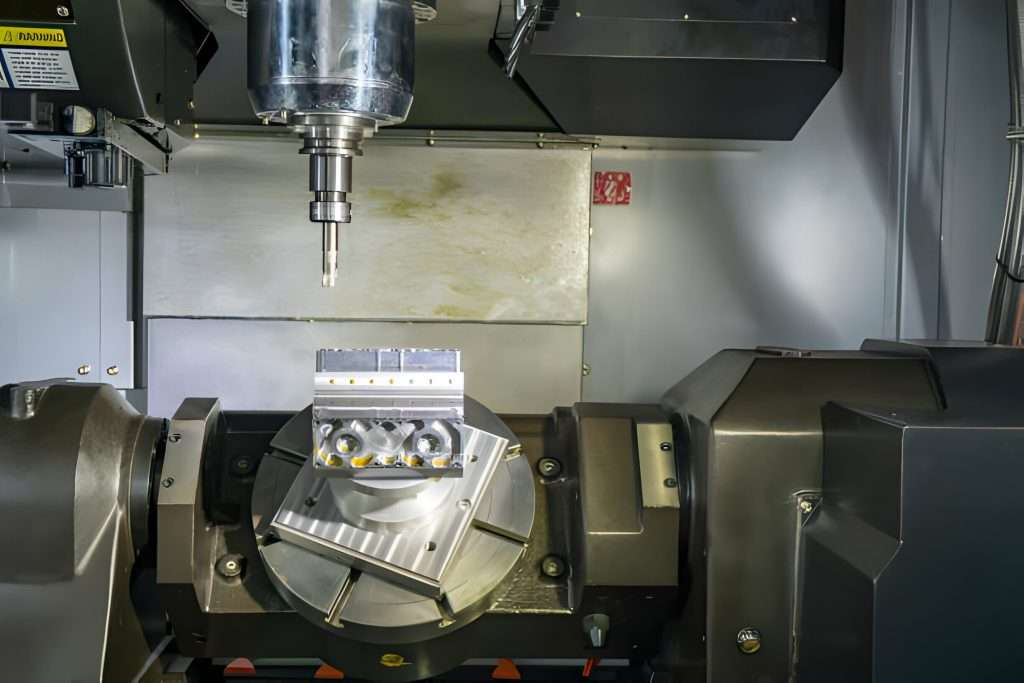
CNC machining changes the way to fabricate mechanical parts, particularly stainless steel components. The precision and efficiency provided by this technology is vital to be able to manufacture high quality parts. These stainless steel components in GD HUB with their unparalleled strength and stability make them a necessity across a variety of industries including aerospace, automotive, robotics and medical. The demand for stainless steel continues to rise as it consistently meets stringent industry standards. By utilizing CNC Machining ensures that every cnc steel component is produced to the same standards, which increases performance and reliability. This process reduces the time taken to make the product and making it important in manufacturing due to its ability to provide a superior quality final outcome.
Understanding CNC Machining
Basics of CNC Machining(Overview)
Computer numerical control (CNC) machining is a good way to create precise and complex parts using computer-controlled machines [4]. You direct these machines with a set of programs and instructions, and they can do their thing to complete the tasks with little human involvement. This ensures that each component is produced to specific measurements, improving quality and reproducibility. Although manual machining is advantageous, it can lead to commercial variability. CNC helps you eliminate this and provides products of a near-perfect quality.
Benefits of CNC Machining
Precision and Accuracy
One of the most important advantages of CNC machining is that it provides unparalleled precision and repeatability. Computer-controlled instructions replace human error, providing uniform dimensional precision on every component. That translates into a number of benefits, including
- Enhanced Product Quality: CNC Machining can achieve high-quality finishes and intricate details that manual processes might miss.
- Reduced Scrap Rate: Accurate machining results in less material wastage that results in cost and resource saving.
- Improved Design Flexibility: You can easily modify designs without extensive retooling, allowing for rapid prototyping and customization.
Rajesh Patel, an expert in CNC machining, states, “CNC machining represents a transformative force in the manufacturing landscape, offering businesses a path towards increased efficiency, precision, and versatility.”
Efficiency and Speed
Not only does CNC machining provide high accuracy but it also increases the speed of production tremendously. These machines work tirelessly 24/7 without getting tired or making mistakes. So, it will give you the quickest turnaround time and also higher productivity. Also, CNC machines can perform different operations at the same time making the manufacturing process even more efficient. This will prepare your business to handle the challenge of tight deadlines and high-volume demand using CNC technology.
CNC Machining with Stainless Steel Fabrication
Milling and Turning
Techniques and Applications
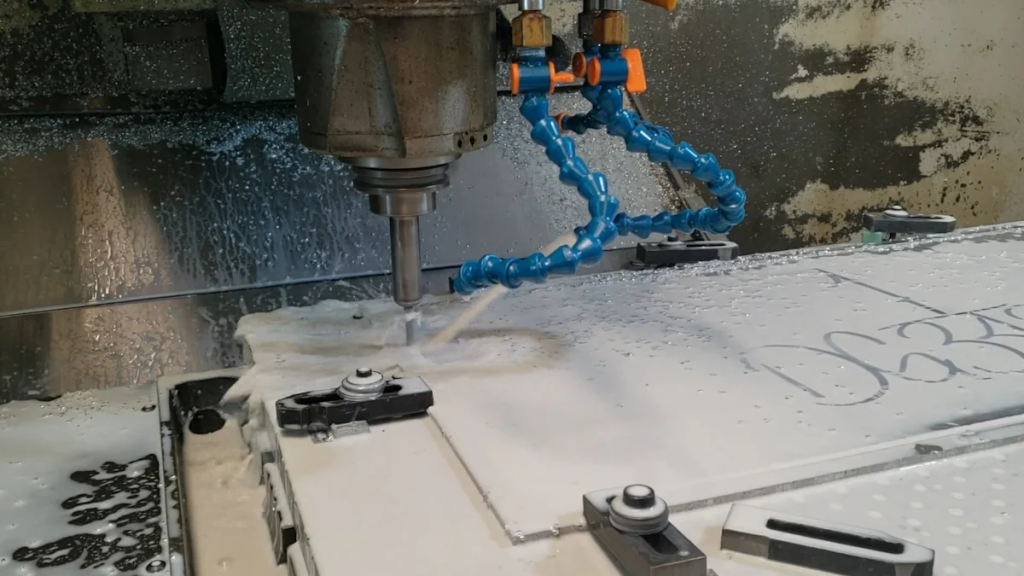
If we are to talk about the essential operations in CNC machining, milling and turning remain some of the most important ones when it comes to manufacturing cnc steel parts. Milling is a process that utilizes rotary cutter to remove material from a workpiece and you can make some complex shapes and designs. It is especially effective for high precision components of compact stainless steel. However, turning rotates the workpiece in order to shape it against a cutting tool — making this process suitable for cylindrical parts. Both are of importance since high-quality stainless steel pieces are needed in industries such as aerospace and automotive.
Challenges and Solutions
CNC machining brings numerous features; however, the nature of stainless steel makes it a challenge to work with. Hardness and corrosion resistance of the material both contribute to increased tool wear and machining difficulties. To avoid these challenges, you need to choose the right cutting tools and optimize machining parameters. By utilizing decent-grade carbide tools while implementing efficient cooling measures, the loss can be minimized considerably. Knowing what is required of the various grades also means that you will not fall short and compromise your results.
Other Relevant CNC Processes
Drilling and Cutting
Drilling and cutting are essential stages in the process of manufacturing stainless steel components. GD HUB’S drilling is a technique that enables us to create perfectly-sized holes within the fabrication as necessary, which is essential for assembling parts and maintaining structural integrity. This is possible through the use of CNC machines, which provide high levels of accuracy and repeatability. The cutting process, by laser or plasma methods, gives you the opportunity to form sheets of stainless steel into your desired shapes. These processes are essential in the manufacture of cnc steel components that meet specific sizes and industry requirements.
Surface Finishing Techniques
Stainless steel carries out surface finishing which helps in the enhancement and overall completion of the appearance and working function of a component. Polishing, bead blasting and electroplated create visual appeal while providing functional advantages. Bead blasting generates a matte surface, whereas polishing leads to shiny, reflective surfaces. The electroplated layer is also a protective layer that increases the corrosion resistance. Using the right technique of surface finishing, one can make stainless steel parts that perform excellently and look aesthetically pleasing.
Design Considerations and Material Selection
Properties of Stainless Steel
Corrosion Resistance
One of the reasons that makes stainless steel such an excellent and popular material for CNC machining is its high corrosion resistance. This is a special property of chromium, which where the chromium passes on the surface forms a passive layer that also protects from rust and oxidation. This helps provide you with natural exposure to its features such as when designing components that are used in environments exposed to harsh conditions like the medical and aerospace industry. Selecting stainless steel guarantees your product maintains both its form and function throughout the ages
Strength and Durability
Stainless Steel: Its strength and durability ensure that items made with it are strong and long-lasting as well. The tensile strength allows it to endure the pressure without losing its shape, that is very important in applications that must have structural integrity. Ideal for automotive parts, consumer goods and other high-demand applications you can count on stainless steel. The durability of this material will make your parts reliable and functional for the duration of their life cycle
Design Tips for CNC Machining
Tolerances and Specifications
When designing for CNC machining, understanding tolerances and specifications is vital. Tolerances specify what is acceptable deviation from a given dimension to properly fit things together. In several areas, aerospace and medical for example, precise and accurate parts should adhere to achieve tight tolerances.
- Consider Material Properties: The hardness of stainless steel may cause challenges in machining processes. The design needs to adjust these features accordingly.
- Plan for Surface Finishing: if the components need Surface treatment, per GD HUB’s policy, our engineers needs to take into account the amount of machining cuts at the same time, to ensure that the part meets the tolerance requirements after surface treatment.
Applying these design tips leads to better manufacturability and improved part performance for the stainless steel components that GD HUB make so they can meet all necessary specifications and customer requirements.
CNC machining, which greatly adds to the value that comes with stainless steel fabrication due to its ability to provide precision dimensions and characteristics in an efficient manner. With this, you experience less waste and better quality of the product thus it is a necessity in current manufacturing. In 2024 and beyond, continue to see advancements in AI, automation and data analytics that take GD HUB’s CNC to another level. In turn, holds the potential for higher levels of flexibility and efficiency, establishing CNC machining as a permanent part of future industrial practices. These developments are quite necessary for you because the needs of every industry where good quality steel cnc machined components are required keep changing over time and you need to be updated with these improvements.
See Also
Comprehensive Overview of Steel CNC Machining Techniques
Precision CNC Machining for Large-Scale Projects
Enhancing Rapid Prototyping Efficiency with 5-Axis Machining