



Plastic Machining through CNC poses challenges that can stump even experienced machinists. Managing heat generation, choosing the right cutting tools, and handling your material properly are all part of the process. Such factors remain fundamental to ensure outcomes are high quality. Q. Why is it important to know about the challenges of plastics machining? EPRO-RAPID acknowledges these challenges and provides actionable solutions to address them head-on. To end up with accurate and reliable work with every project, EPRO-RAPID addresses challenges such as poor chip formation and deformation due to clamping.
Understanding Material Properties in Plastic CNC Machining
This is true for plastic CNC machining, where knowledge of the material properties is very important. All plastics have varying characteristics that can contribute significantly to the machining process. So, let us explore what are the different types of plastics and what are their properties, along with why choosing the right material is important for your application.
Different Kinds of Plastics and Their Qualities
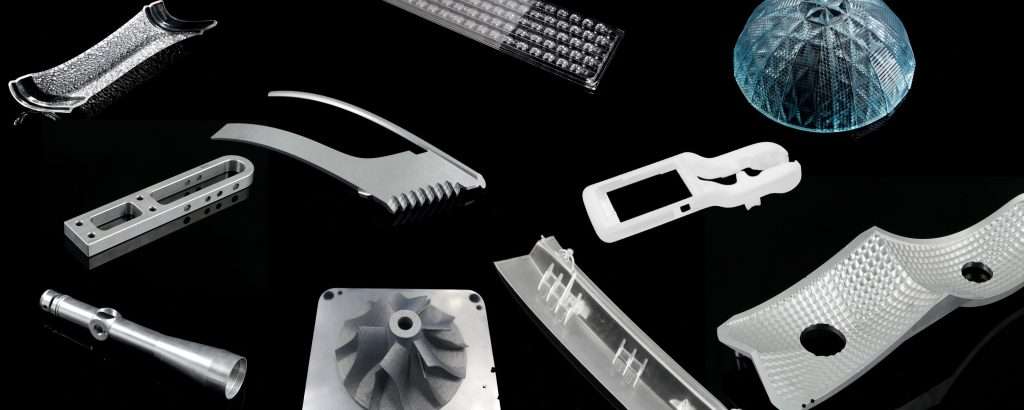
Difference Between Thermoplastics and Thermosetting Plastics
There are two main categories of plastics: Thermoplastics and Thermosetting plastics. Thermoplastics (e.g., Nylon, Polyethylene (PE)) Thermoplastics become pliable upon heating, and solidify upon cooling. This property enables them to be reshaped several times, and makes them appealing for applications that require flexibility and recyclability. Whereas thermosetting plastics cannot be remolded after they are set. They provide good heat and structural stability and can be used in high-temperature applications.
Material Properties and Their Effects on Machining
Commonly Used Plastics in CNC Machining, The properties of plastics — including tensile strength, machinability, and ductility — are vital to the CNC machining evolution. As an example, Delrin, one of the most common polymers, is ideal for strong and rigid applications, which makes it great for tight tolerance machining. While UHMW has excellent abrasion resistance, it is challenging as it has no stability while machining. Familiarity with these properties allows machinists to select appropriate tooling and methods to mitigate the challenges associated with machining plastics.
Material Selection: What Does It Matter?
Getting the Right Material for the Right Application
Because of this, you are needing to decide upon the best plastic for your CNC machining project. Think about application requirements — whether it be durability, flexibility, environmental conditions, etc. For example, acrylic, which is lightweight with high machinability and a clear finish, finds usage in almost all applications. On the other hand, Polyphenylsulfone is a high-performance thermoplastic that is well-suited for challenging environments.
Durability of the material to be considered
Another important consideration in material selection is durability. With high tensile strength nylon is ideal for demanding and durable parts. Likewise, PET is a food-grade and water-proof substance and hence is highly utilized in the food and beverage sector. By adapting the material’s strength to the application’s requirements, machinists can guarantee that the final product will be durable and dependable.
At EPRO-RAPID, we comprehend the intricacies of CNC machining of plastic materials. With over 100 materials, from tough materials like ABS and HDPE, we can tailor our services to suit a variety of industry requirements. From simple to complex designs our experience makes the difference.
Reduce Clamping Forces of the CNC Machining Plastic
Clamping is pivotal in the CNC machining plastic domain. And it’s not just about holding the material in place — it’s doing it in a way so that it doesn’t damage the document. So, here are some methods to ensure your part is adequately clamped without sacrificing the integrity of your plastic part.
How to Clamping Carefully with Some Techniques
Using Soft Jaws and Fixtures for Plastic CNC Machining
In plastic CNC machining, the use of soft jaws and fixtures is a game changer. They give a soft clench that minimizes the chances of marring or deforming the material. Using soft jaws, machinists are able to hold parts tightly without too much ganging up. Some as important here apply the cloaked area and you will cover areas, small neural you are using it on delicate or fashion. These are techniques commonly used by EPRO-RAPID to ensure pristine complex part machining from start to finish.
Balancing Clamping Pressure
It is vital to balance the clamping pressure. Excess pressure causes deformation; insufficient pressure leads to instability. The trick is to find the right combination of firm and gentle pressure on the material to keep moving without damaging it. Modifying clamping techniques to induce only as much force as needed keeps dimensions uniform. An appropriate balance ensures that the end product is as per expectation without loss in structural strength.
Effect of Clamping on the Integrity of the Material
Avoiding Deformation
One of the most common issues in CNC machining plastic deformation. Additional clamping force can cause the material to warp and influence inaccuracies. Machinists can avoid this by carefully calibrating their clamping systems. They help avoid deformation of plastic parts If the clamping forces are reduced as far as possible, the risk of deformation is also minimized and the plastic parts are created in the shape in which they are needed. Thanks to EPRO-RAPID’s expertise in machining tough materials, we guarantee every part robustly survives machining.
Achieving Accuracy and Consistency
It is precision of throw, which is stability! It helps with both, and proper clamping techniques aid in both. Properly clamped material enables more precise operation of the cutting tools. This precision is crucial to delivering the high-quality finishes that clients demand. Stability is key during machining and that is why we have made it our priority at EPRO-RAPID. More importantly, advanced clamping solutions from them help ensure that every part, no matter how simple or complex, meets the highest expectations for quality and precision.
Learning these different methods of clamping, those involved in CNC machining plastic can become confident and competent at tackling the issues this type of machining brings up. Indeed: EPRO-RAPID brings these best practices to each project, resulting in consistent, reliable, and accurate results.
Cutting Tools: The Right Tools for the Precision Machining of Plastics
In plastic CNC machining, responsible cutting tools selection is key. The utilization of suitable tooling aids a great operational difference with a clean finest response. We can investigate tool materials and coatings, as well as tool geometry and design, so that your machinery will be sure to be successful in your machining endeavors.
Tool Material and Coating
Carbide vs. High-Speed Steel
Machinist topics often cover the differences between carbide and HSS, or high-speed steel. In the details you attach to the carbide junk, carbide is extremely hard and wear-resistant, making it great for cutting through hard materials. These stay sharper longer, and, for precision machining plastics, this is key. HSS tools, on the other hand, offer more flexibility and resilience, which might come in handy if you’re working with some plastics that need a gentler touch. Choosing one of these materials really depends on the needs of the project itself and the type of plastic being machined.
Benefits of Coated Tools
CNC machining: additional benefits of coated tools Surfaces such as titanium nitride (TiN) or diamond-like carbon (DLC) are used to minimize the amount of friction and heat generated while cutting. This decrease is important because plastics can be responsive to heat, resulting in warping or melting. It improves the life of tool and surface finish as; the cut are smooth. Depending on the project, we know the type of coated tool that will provide the best results.
Tool Geometry and Design of Plastic CNC Machining
The Importance of Sharpness and Angle
The cutting tool geometry is a key factor in determining its efficiency. Consider sharpness and angle; they are critical. A sharp blade edge reduces the force need to cut, which lowers the likelihood of damaging the plastic. The tool is to be angle which decides the chip formation and heat dissipation. Designed tools with right angles that help keep their cutting ability and protect the plastic part being cut. With a commitment to excellence, EPRO-RAPID enables every project to achieve the highest quality via their experience in choosing an ideal tool geometry.
Reducing Heat and Friction
One of the issues encountered when CNC machining plastics is heat and friction. The best way to deal with these problems as machinists is to minimize them with tool design. Optimized geometries and coatings for tools help dissipate the heat and limit the friction. This keeps the plastic from becoming too hot and enables it to retain its dimensional stability. When choosing a proper set of tools, machinists can manage high precision in the machining shop and avoid common pitfalls of plastic machining.
CNC Machining Plastic: How to Keep Temperatures the Same
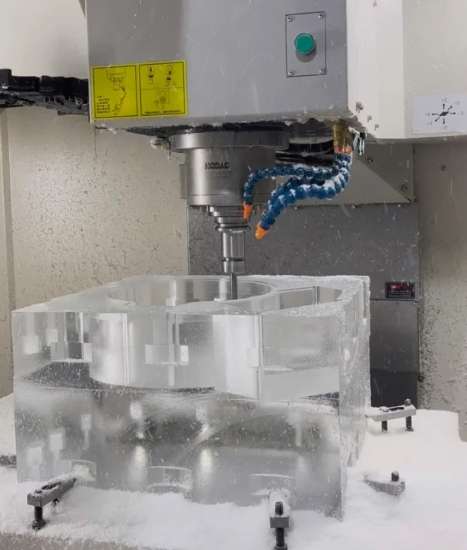
Temperature control is vital during plastic CNC machining. Plastics are heat-sensitive functional materials and react strongly even to small temperature variations that can result in dimensional changes or stress cracking. Now, let us take a look into some heat management strategies and cooling techniques to achieve precise machining of plastics.
Cooling Techniques
Application of Coolants & Lubricants
These call for a coolant & lubricants to maintain an ambient temperature. These dissipate heat produced when cutting, so the plastic doesn’t become too hot. With the right coolant the friction is also reduced, giving a better surface finish to the machined part. When working with durable materials, EPRO-RAPID tends to utilize specific coolants in order to preserve each undertaking accurately.
Air vs. Liquid Cooling
Air or liquid cooling? It all relies on the machining process to be conducted. For less demanding applications, air cooling is simple and effective. It is the process of boundary layer cooling, in which air flows over the work piece to dissipate heat. Liquid cooling, in contrast, provides far superior heat removal, making it more suitable for high-speed operations. It pumps a coolant around the cutting area, keeping temperature consistent. EPRO-RAPID knows just how to purpose a cooling type so parts stay stable and accurate when lengthy and slow-cutting processes are performed.
Managing Heat Generation in Plastic CNC Machining
Adjusting Cutting Speeds
The heat generated in cutting is greatly affected by the cutting speed. Higher speeds generate more heat, which can melt plastic parts. Machinists can control the amount of heat produced by changing the cutting speed. Some plastics require slower speeds for dimensional stability. EPRO-RAPID delivers optimal cutting performance irrespective of the material properties, as it delicately compares the cutting speeds with the material properties.
Impact of Feed Rates
Heat Generation is also a factor of Feed rates. Too high can increase friction and heat; too low may fail to clear material. It’s all about finding the sweet spot. Feed rates that are correctly calibrated do a good job helping keep the temperature under control, which greatly reduces the chance of warping or melting. Thus, careful consideration in managing the feed rate using EPRO-RAPID ensures every component is created to the highest quality and precision.
With the practice of these methods, machinists can meet the challenge of plastic CNC machining. EPRO-RAPID brings this together so that every project is best practice, providing an accurate and reliable outcome, through its dedication to best practice and innovative methods.
A strategic approach is needed to overcome plastic CNC machining challenges. Machinists are able to create precision and accuracy as long as they have a basic understanding of material properties and know which tools to select. Clever tricks, such as reducing clamping forces and keeping ideal temperatures, are important. EPRO-RAPID, built for real-time machinists, inspires machists to put these solutions to work to bolster their processes. It is essential to embrace continuous learning and adaptation. Recording what we encounter and adapting to how material performs will get us real gains. In this series, EPRO-RAPID will be going through some CNC Machining basics, tips, tricks, and hacks.