
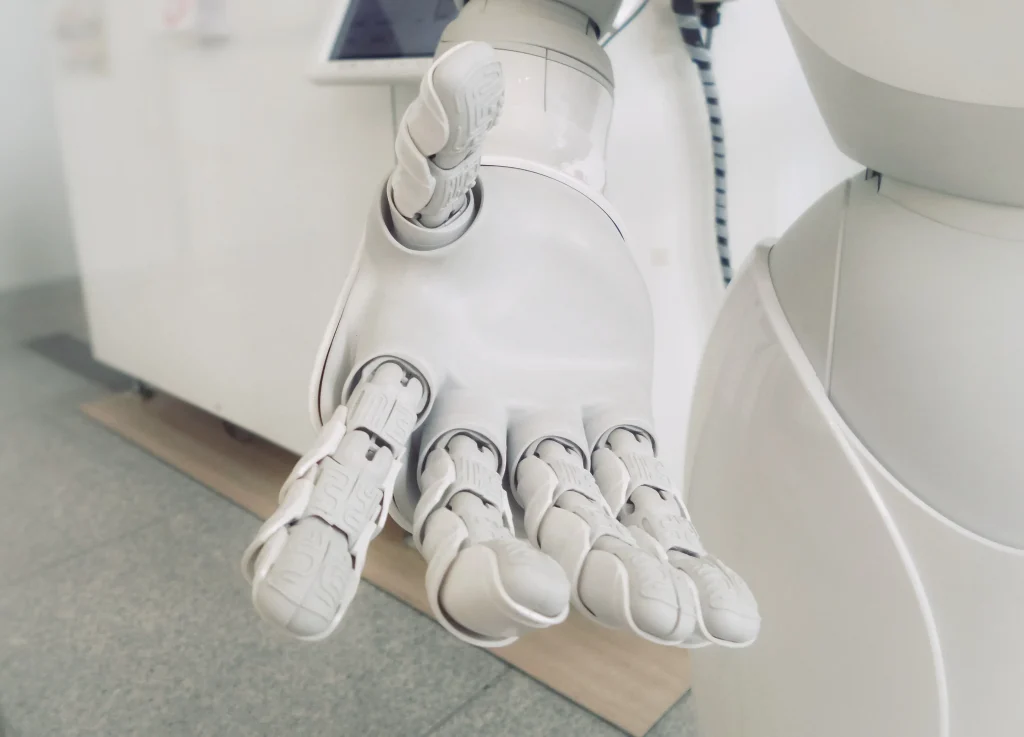


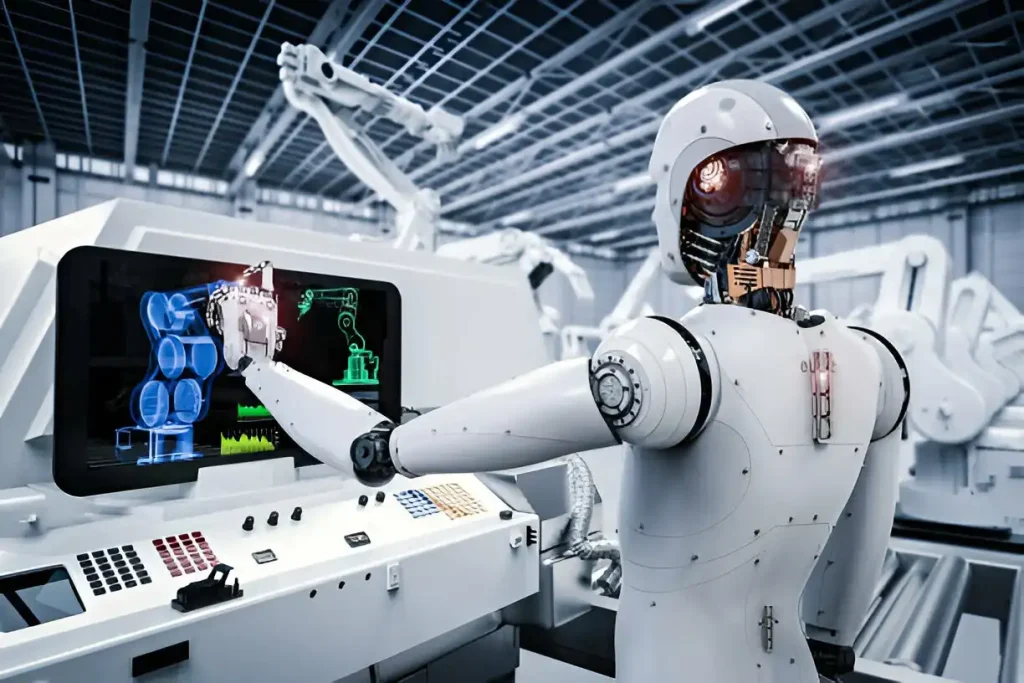
Introduction CNC Machining And Robots Go Hand In Hand
The CNC machining sector is witnessing a paradigm shift as robotics and artificial intelligence (AI) come together to tackle long-standing challenges of precision, scalability and sustainability. The new capabilities are vital and essential for global trade businesses focused on CNC solutions, offering not only an upgrade to a vital technology but also a strategy to help other industries from aerospace to medical robotics address rapidly changing requirements for such systems. CNC workflows equipped with smart robotics will help bring revolutionary efficiency to manufacturers by the year 2025 and present new avenues for innovation.
Automation and Collaborative Robotics: Transforming the Modern Factory
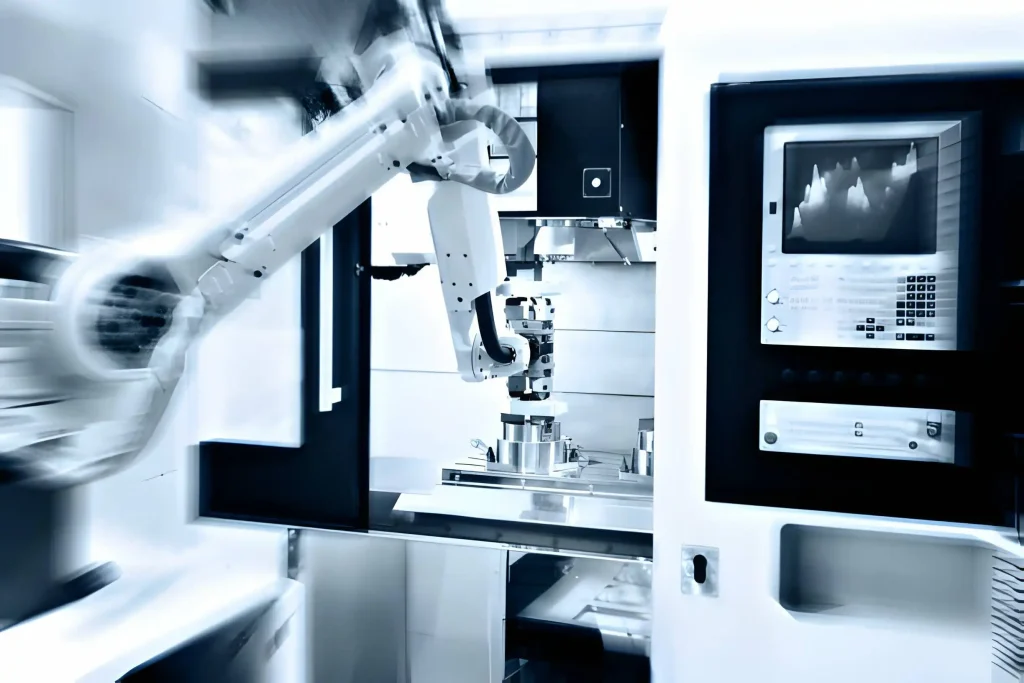
We are already living in a world of fully automated smart factories. In 2025, collaborative robots (cobots) won’t be experimental tools but rather key partners in CNC workflows. These cobots are built to work beside human operators, performing tasks that are repetitive in nature like:
Roboctor: Automated Load/unload (raw material/Finished parts)
Artificial Intelligence: AI-driven defect detection technology enables vision-equipped cobots to conduct real-time inspections.
Post-Processing: Deburring, polishing and surface finish to millimeter level.
Automotive manufacturers, such as Tesla, recently employed cobots at scale to operate high-volume CNC production lines at 25% shorter cycle times and virtually no errors[3]. The integration of human expertise and robotic precision is paramount in industries that demand rapid scalability like consumer electronics and industrial robotics.
Predictive Maintenance using AI: Reducing Downtime and Increasing ROI
Manufacturers lose an estimated $260,000 an hour due to unplanned downtime. In 2025, AI-enabled predictive maintenance applications are addressing this pain point by converting raw sensor data into actionable insights. Here’s how it works:
Use Case of IoT in CNC Machining Real-Time Monitoring
Machine learning algorithms analyze historical native capabilities alongside real time data collected from various connectors to help predict components failures weeks in advance.
Proactive Repairs Maintenance teams get notified automatically when they need to replace worn tools, or recalibrate machines before they break down.
For example, in a case study out of Siemens’ smart factory in Germany, predictive maintenance decreased unplanned outages by 58% and prolonged machine lifecycle by 20%. For robotics manufacturers that produce high-value components, such technology ensures both consistent quality and on-time delivery — two major differentiators in global trade.
5-Axis CNC Machining: For Precision Parts in Complex Robotics
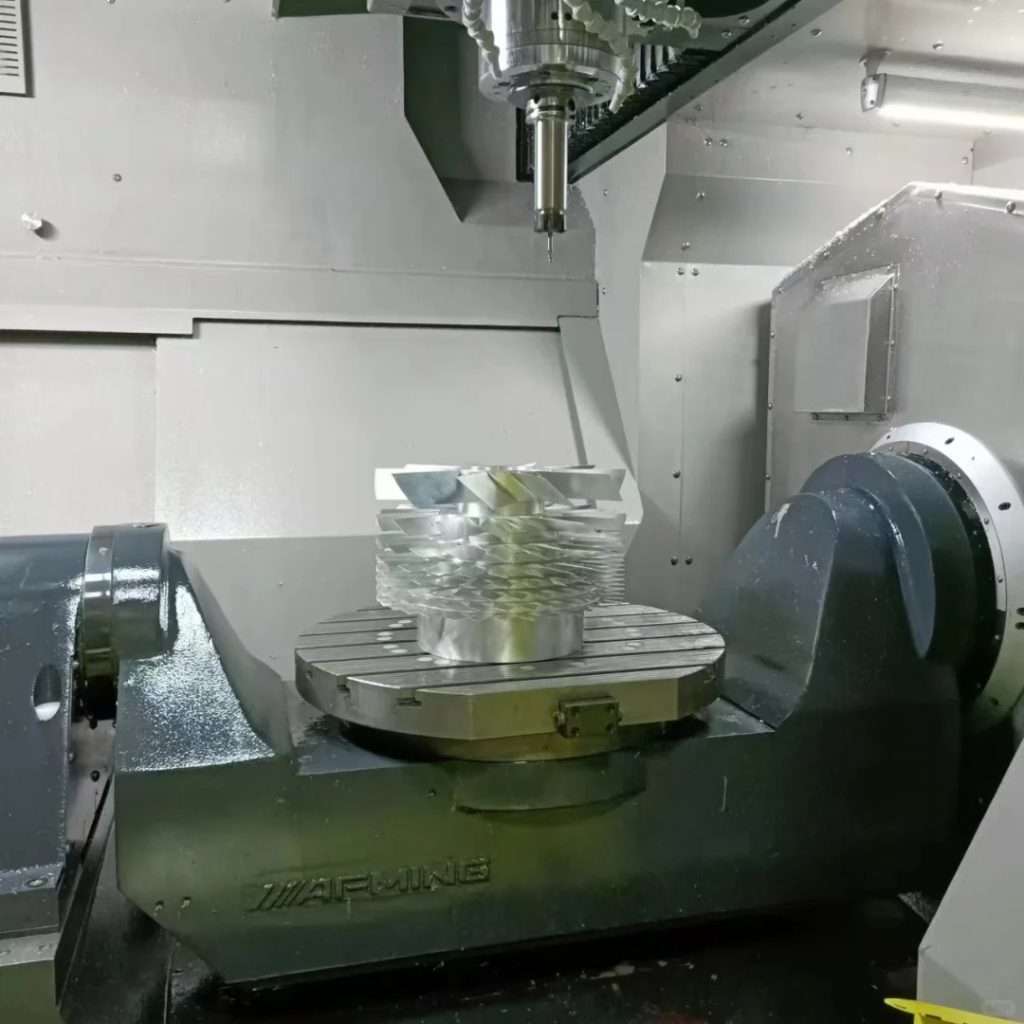
5-axis CNC machining has assimilated into its own piece of the robotics industry pie as its necessity for detailed. Lightweight components has become readily apparent. The difference between 3-axis systems used in traditional companies and 5-axis machines is that they allow for concurrent cutting from different angles, which brings advantages like:
Complex Geometries: Robotic arm joints, sensor housings, and drone propellers manufactured with a single-pass machining process. It can be directly processed by 5-axis in a single clamping, without the need for multiple flip-flop clamping, reducing errors.
Less Material Waste: Toolpaths can be optimized to minimize scrap, an important dollar amount with expensive alloys like titanium or Inconel.
Faster Turnarounds: Secondary setups add 30–50% to lead times, but with 5-axis CNC machining, EPRO-RAPID DON’T NEED secondary setups.
Medical robotics are one such application, with companies such as Intuitive Surgical producing surgical robot parts. Via 5-axis CNC systems fit to create parts with tolerances on the order of 5 microns. Likewise, aerospace robotics manufacturers employ this tech to build fuel-efficient honeycomb structures drone components. The barriers to entry for high-precision markets have been lowered with 5-axis machines now available at lower price points, opening the market to even SMEs.
5 Ways Robotics Startups Can Be More Flexible With On-Demand CNC Machining And Digital Twins
Many robotics startups have led to a need for on-demand CNC services. Cloud-based platforms can provide instant quoting, AI-assisted design validation, and production scheduling in days—rather than weeks. Key innovations include:
The use of digital twins: Because CNC machines are replicable, think of a virtual version of the CNC machine in the factory simulating the process, verifying which feed value can be the best or which coolant throw can be better.
Hybrid Manufacturing: Additive manufacturing (3D printing) & CNC machining are combined to manufacture components, such as heat resistant drone motors.
Blockchain Traceability: Recording material origins and machining parameters in a decentralized ledger for securing supply chains.
So, for example, Boston Dynamics uses On-Demand CNC services to prototype parts for its quadruped robots, increasing R&D cycles by 40%. This flexibility is essential for startups operating in rapidly changing markets such as warehouse automation and agricultural robotics.
Sustainable CNC Machining: In line with worldwide ESG objective
Sustainability has transitioned from a voluntary initiative to an operational imperative in global manufacturing. As regulatory pressures intensify—exemplified by the EU’s Carbon Border Adjustment Mechanism (CBAM). And its €50/ton carbon tariffs—CNC manufacturers and robotics partners must now tightly integrate environmental stewardship into their workflows. Among the most impactful 2025 trends is intelligent power control in CNC systems, where AI algorithms dynamically optimize energy use. By analyzing real-time data from IoT sensors, these systems reduce idle machine consumption by 15–20%. A breakthrough evidenced by Bosch Rexroth’s annual energy cost savings of $4.7M across its smart factories. This shift not only ensures compliance but also positions firms to capture ESG-focused contracts in sectors like electric vehicles and renewable energy infrastructure.
Biorecyclable Coolants: Bio-based cutting fluids disintegrates with nature, no hazardous waste is produced.
Circular Manufacturing: Scrap metal from CNC processes are recycled as feedstock for additive manufacturing.
Factories powered completely by solar energy–backed by closed-loop cooling systems, for example, have already allowed companies such as Fanuc to produce carbon-neutral CNCs. For international traders, adopting these practices improves brand equity and gives access to contracts linked with ESG-preserving customers.
Implications for CNC Exporters and Their Strategic Response
CNC Machining companies can leverage on these trends by:
Make the investment in AI and IoT: Retrofit old machines with smart sensors and analytics platforms.
Diversify into 5-Axis: Focus on high-growth areas such as medical robotics and renewable energy.
Agile Models: Launch on-demand services integrated with a digital twin for startup clients.
Sustainability Up In Lights: Certify processes with ISO 14001 or similar standards to match global ESG requirements
Conclusion: Into the Future Together
CNC machining, robotics and AI will combine to create a manufacturing environment of speed, accuracy and flexibility by 2025. Exporters know that getting ahead means adopting technologies that not only improve their technical capacity but also their sustainability credentials. The robotics movement is making inroads into industries from logistics to healthcare. For CNC specialists who innovate today, tomorrow’s dominant global supply chains will be theirs.
Discover our CNC solutions and find out how we are incorporating these trends into service offerings for the robotics sector.