



With accuracy and speed that has transformed the world of manufacturing, It is one of those processes. This state-of-the-art technology enables manufacturers to create complex components with exceptional precision, reducing waste and optimizing material use. CNC turning benefits: CNC machine shop benefits from turning machining process not only benefits through accuracy but also in high-speed production while using very little human interference. Find out more, examples and benefits of EPRO-RAPID CNC turning services. Whether in rapid prototyping stages or large-scale production, CNC turning offers reliability, precision, and cost-effective factors that add to the reasons why CNC turning is a main tool in any modern manufacturing process.
Understanding CNC Turning
What is CNC Turning?
CNC turning is a manufacturing process that produces objects with mirror symmetry. It is a process that uses a rotating workpiece to enable a stationary cutting tool to machine the material to its desired shape. This technique is especially useful for manufacturing cylindrical components due to precise and accurate production methods. Also, while the traditional turning method required manual entry, It is implemented with the help of computer numerical control (CNC), which automizes the whole process, resulting in a more consistent outcome.
CNC turning machines, also known as CNC lathes, are equipped with advanced features that allow them to perform a variety of operations. These include facing, threading, knurling, drilling, boring, and taper turning. The versatility of CNC turning makes it suitable for a wide range of industries, from aerospace to automotive and medical devices. By handling both internal and external machining operations, It can produce complex parts with intricate details.
How Does It Works?
Welcome to the world of CNC turning machines. In these machines, a workpiece is rotated with great speed, while a fixed cutting tool mills the material. All parameters of the process, CNC SYSTEM maintain the rotation speed to the cutting tool path. Such exactness permits accurate creation of components with precise specifications, minimizing wastage and enhancing efficiency.
Over the years, turning centers have come a long way. What started out as a machine to do simple operations has now evolved to include sophisticated operations like multi-axis machining and live tooling. These properties enable the production of intricate shapes and designs with exceptional precision. For instance, a turning center can utilize spindles with 3, 4, or 5 axes, making it suitable for various applications such as milling and drilling.
Turning services offered by EPRO-RAPID reflect the advanced nature of this technology. Is comprised of the latest manufacturing technology including automatic tool changers, spindle speeders and tool presetters that facilitate speed and accuracy while machining. This sophisticated equipment enables us to manufacture components to tighter tolerances and greater accuracy than ever previously possible.
Advantages
Precision and Accuracy

Due to its impressive tight tolerances, CNC turning excels. By leveraging this technology, manufacturers can produce parts with a higher degree of precision, ensuring each component meets the exact specifications. Automating turning operations minimizes human error and guarantees consistent quality across every production run. This comes in handy in the service that EPRO-RAPID’s turning services provide, which does not compromise on tight tolerances with high precision parts. Being able to do so with such precision doesn’t just make the end product better, it also leads to less wastage, as less material gets scrapped when you mess up.
Speed and Efficiency
Speed and efficiency of turning production is also a boon. As CNC machines are automated, the production speed is higher, and quality is not sacrificed. CNC turning operations simplify the manufacturing process, reducing the need for manual intervention and facilitating faster turnaround. AGV-EPRO-RAPID utilizes this efficiency to provide rapid prototyping and large-scale production services with the guarantee of timely delivery of parts to customers. This added worker buoyancy is competitive growing effect for companies in this fast-cycle industry.
Cost-effectiveness
CNC turning is budget-friendly for manufacturing requirements. Metal fabricators who use CNC manufacturing will often see an increase in accuracy and a reduction in cost, both through reduced labor costs and reduced material waste. It is a less expensive way to actually make a high-quality part, which can be attractive for companies looking to stretch a budget. With CNC lathing, parts are produced within tight tolerances and specifications, leading to fewer defects and less scrap material, and ultimately saving time and money. These other advantages, together with the lower costs associated with CNC turning, make it a veryimportant part of modern manufacturing.
CNC Turning vs. CNC Milling
It is the manufacturing sector where selecting the method can be the game-changer. Lathing is a favorite for its versatility and efficiency, but how does that stack up against other methods, like CNC milling? Let’s dive into the details.

CNC lathing and CNC milling are common manufacturing processes, but one is not the other. CNC turning involves a rotating workpiece and a cutting tool that works against the rotating workpiece. This technique is great for producing cylindrical components with extreme accuracy. In contrast, CNC milling uses a rotating cutting tool that moves over a stationary workpiece, making it suitable for more complex shapes and surfaces.
Match of Precision and Complexity: CNC lathing is unparalleled for cylindrical components, whereas CNC milling is found to outperform as far as complex designs that use multiple features. They are very accurate options, but which is the best for the job depends on the geometry of the part.
Time & Performance: For axially symmetrical items, CNC turning frequently provides quicker production times owing to its efficient procedure. On the other hand, CNC milling can accommodate more complex geometries, albeit at a slower rate.
Cost-Effectiveness: CNC turning is generally more cost-effective than CNC milling production for simple shapes and high-volume production. For parts needing complex detailing CNC milling could be a cheaper alternative.
Combining the CNC turning and milling process, EPRO-RAPID is about giving you a complete solution for a specific need. By recognizing the merits of each technique, producers can enhance their production methods.
CNC Turning and Other Methods
Factors for Choosing CNC Turning is Appropriate Over Other Methods:
Part Geometry: If the part is predominantly cylindrical or has symmetric features then CNC turning is the one to go with. This allows it to create accurate cylindrical forms, so it works well for parts like shafts and bushings.
Volume and Speed : CNC turning is fast and efficient for high volume production runs. Automation of it requires less human effort, significantly speeds up production timelines and saves money.
Material Factors: CNC lating is capable of processing a wide array of materials, from metals to plastics. It guarantees high quality across all parts, which is important in working with materials that require tight tolerances.
No Limits on Design: The best part? CNC turning is not short on design. Regarding parts that have complex features, CNC milling may be a better.
Types of CNC Turning Centers
Understanding the various types of CNC lathing centers is critical when it comes to CNC turning. Machine tools are essential for precision manufacturing and cover a range of applications across industries. So let us go through the two primary types, Horizontal Turning Centers & Vertical Turning Centers.
Horizontal Turning Centers
It’s horizontal turning centers that are the true workhorses of the CNC world. It is good for cylindrical parts with high precision and a large number of production. These machines rotate the workpiece in a horizontal motion to carry out turning, milling, drilling and tapping operations. The horizontal orientation allows for long and slender components such as shafts and rods.
Versatility: Horizontal turning centers can be used for various kinds of materials including metals, plastics, etc. This adaptability renders them useful in fields such as automotive, aerospace and medical devices.
Advanced Features: With multi-axis configurations, they can perform complex machining tasks. These machines also often come with options such as automatic tool changers and live tooling, which expands their capability to manufacture intricate geometries.
Production Efficiency — The enclosed design of horizontal turning centers helps keep chips and coolant splashes contained, resulting in a clean, efficient workspace. This in itself brings better production speed alongside top quality standards.
Using the latest horizontal turning centers, EPRO-RAPID’s CNC turning services manufacture precision-engineered parts designed to meet specific project needs.
Vertical Turning Centers
Vertical turning centers approach CNC machining from a different angle. The workpiece is rotated vertically in these machines which is advantageous when dealing with large-scale, heavy components. This orientation helps to retain throughput and accessibility for complex machined features.
Complex Machining: Vertical turning centers can include milling and drilling capabilities, which make them ideal for complex geometries and operations. They can deal with both easy and elaborate designs effortlessly.
Space Efficiency: The vertical arrangement is compact and requires less floor space, making it better for space-limited facilities. For their small footprint, these machines pack a powerful punch.
Precision And Accuracy: Just like their horizontal ones, vertical turning centers also provide high precision and accuracy. The 3D printing process is also more efficient than traditional manufacturing, as it minimizes material waste by creating exactly what is needed.
EPRO-RAPID uses the type of vertical turning centers that can produce top-quality parts with tight tolerances for diverse industries.
TOP 5 USES OF CNC TURNING

CNC turning is a critical process for many industries, providing precision and efficiency that manual methods cannot achieve. Let us see how this technology is an advantage to various sectors along with examples for CNC turned parts.
Users that benefit from CNC Turning
Due to its capability of manufacturing attachments to a specific size, It has established itself as a foundation in numerous sectors. Let’s take a closer look at some industries that are major users of turning services:
| Automotive Industry | Turning is used by manufacturers to produce engine parts, transmission components, and other vital parts. CNC turned parts ensure a smooth and efficient running of the vehicles |
| Aerospace Industry | In the world of aerospace, precision is the name of the game. CNC lathing can generate parts for aircraft, spacecraft and satellites, which must adhere to strict safety and performance criteria. |
| Medical Industry | The CNC turning is essential for medical device manufacturers creating implants, prosthetics, and surgical instruments. CNC turned parts must provide precision and reliability since they are so important to patient safety and treatment success. |
| Electronics Sector | Computer components, cell phone parts, and CNC turning all provide the precision required in the intricate electronic devices. This industry can greatly benefit from small components with a high level of detail and tight tolerances. |
| Other Sectors | It is also used in the furniture, musical instruments, and toys sectors, demonstrating its versatility across a wide range of industries. |
Examples of CNC Turned Parts
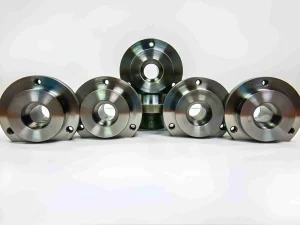
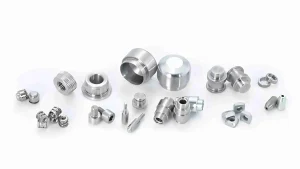
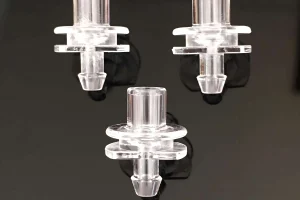
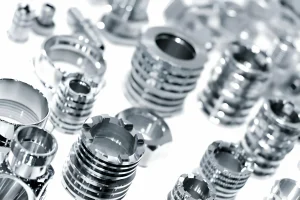
CNC turning services manufacture many different types of parts, based specifically on the requirements of the application. For instance, here are a few examples of CNC turned parts that showcase the versatility and precision of this technology:
| Shafts and rods | Bushings and Bearings | Medical Implants and Prosthetics | Electronic Housings |
|---|---|---|---|
 |  |  |  |
EPRO-RAPID offers CNC turning and these key CNC machined part applications for CNC turning are often found in the industry. EPRO-RAPID has utilized advanced CNC technology to guarantee the highest precision and quality standards for each component.
The benefits of CNC turning are numerous, and it is a crucial technology in today’s fabrication. This precision and accuracy ensure that every piece is manufactured to exact specifications, minimizing waste and enhancing quality. The speed and efficiency of CNC machines significantly reduce production timelines, making them ideal for high-volume manufacturing. Moreover, CNC turning is cost-effective, ensuring prolonged financial savings. EPRO-RAPID, provides state-of-the-art CNC services that illustrate these benefits for a range of industrial applications. Try it for your next project and see the differences for yourself.