



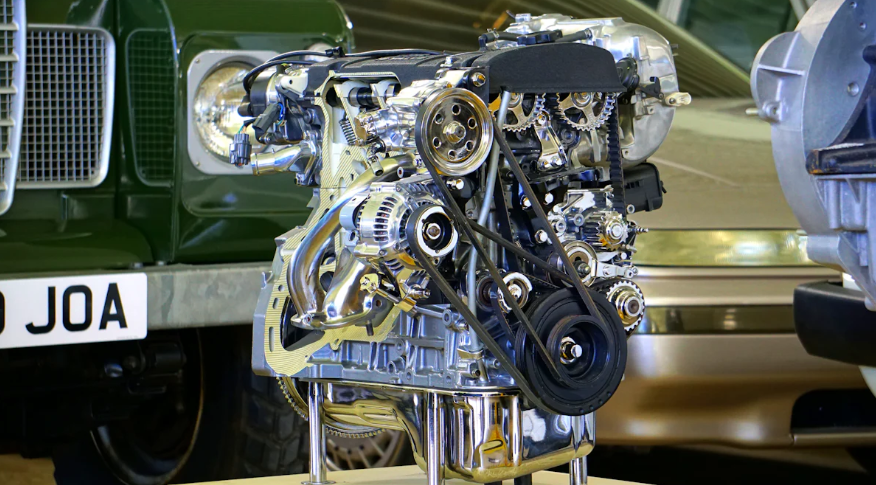
3D printing technology is revolutionizing the automotive industry because it allows getting prototyping faster, cheaper, and more flexible. By allowing automakers to employ recycled or biodegradable materials for complex designs, additive manufacturing minimizes waste. This expedites the process and increases 3D printing opportunities for automotive solutions. It‘s a groundbreaking design, and cost-effective solutions for automotive industry.
Benefits of Rapid Prototyping in Automotive Manufacturing
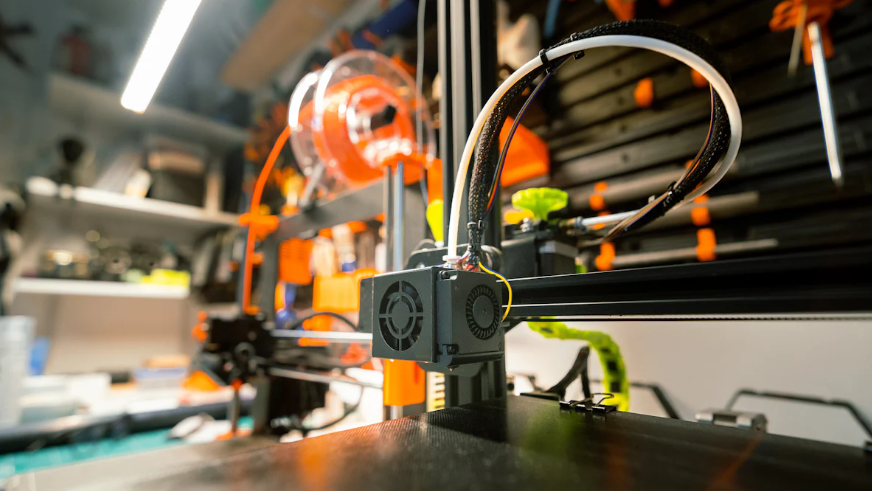
Speed and efficiency are key with fast-paced industrial growth. This process allows for fast prototyping with 3D printing technology which then accelerates the development process and brings several benefits.
Speed and efficiency with 3D Printing
Faster iteration cycles
Additive manufacturing carries an immense advantage over traditional manufacturing methods in terms of automakers quickly progressing to production and testing. It lets engineers solve issues fast rather than wasting time like the traditional approach. Incredible software designs can be adjusted and prototypes readied in hours. It also fosters innovation and generates innovative suggestions to use new designs in automobiles.
Importance of 3D Printing for Manufacturing Industry
From ideation to market, additive manufacutring shortens the time needed for prototyping, saving time in the process. Auto manufacturers can usher new models and features to consumers more quickly. Flexibility is essential to remain competitive and respond to consumer demand.
Cost Reduction with 3D Printing
Waste Reduction
Material waste is often seen in traditional machining due to the material subtracting process. On the other hand, the processing of the additve manufacturing process is additive, which means we have very little waste because, during the processing, we use only the material that is needed. This efficiency saves money and supports sustainable practices by minimizing environmental impact.
Reduced Labor Costs
It saves huge cost on labor to develop molds and tools. Automating the prototyping process will not only save time and free up resources, but save costs too! With the team devoting book time towards perfecting designs, as well as exploring fresh concepts for additive manufacturing in the automotive space.
Design Flexibility
Customization Capabilities
One of the most ingenious facets of 3D print is its ability to create extremely bespoke pieces. Auto manufacturers are able to tailor components according to their requirements, offering clients with a made-to-order solution. Such customization provides opportunities for unprecedented design and features.
Complex geometries
The projects with complex geometries are naturally preferred (3D printing at its finest) because normal methods are extremely difficult to execute. This capability allows the creation of intricate components that improve both the performance and look of a car. Total additive manufacturing is a subcategory of additive manufacturing tech that enables you to create lightweight structures that can enhance the aerodynamics and fuel economy of a vehicle.
Additive Manufacturing for Complex Geometries and Custom Tooling

Additive manufacturing process is transforming the automotive industry in ways that go beyond that of any original manufacturing methods, allowing for complex designs and much more innovative solutions for custom tooling. With this technology, it is possible for manufacturers to take designing and production of vehicles to the next level.
Complex Geometries
This is where 3D printing excels, to create complex geometries. Traditional manufacturing techniques fail at complicated designs, whereas additive manufacturing seamlessly takes care of them.
Lightweight Structures
Automotive manufacturers can design lightweight structures that improve automotive performance. Using lightweight materials helps reduce the total vehicle weight, resulting in better fuel economy and handling. Not only does this make a positive impact on the environment, it is also something consumers are demanding for a more efficient vehicle.
Enhanced Performance Features with addivtive manufacturing
This capability for producing complex geometries enables manufacturers to integrate superior performance attributes into their designs. [Tuning features such as] those which could be utilized for a certain type of vehicle’s aero (note that most tuning features also improve the vehicle’s balance and speed). Thanks to 3D printed parts, car makers can play with concepts, and replicate creative designs.
Custom Tooling
Tooling for custom parts is yet another domain where additive shines. It also provides flexibility and efficiency that traditional approaches simply cannot match.
On-Demand Tool Production with 3D Printing
Penn 3D printers are able to manufacture tools on-demand, eliminating the need for large stockpiles. This enables quick response to changes in design or production needs. This means custom tooling is fast and easy; you can instantly react, so there is little to no downtime.
Reduced Lead Times
Companies reduce lead times considerably by using additive manufacturing. Fast & Efficient—The Customized 3D printed parts can be created more effectively and quickly. In a fast-moving automotive environment, remaining competitive means moving quickly.
Impact on Maintenance and Repair in Automotive Manufacturing
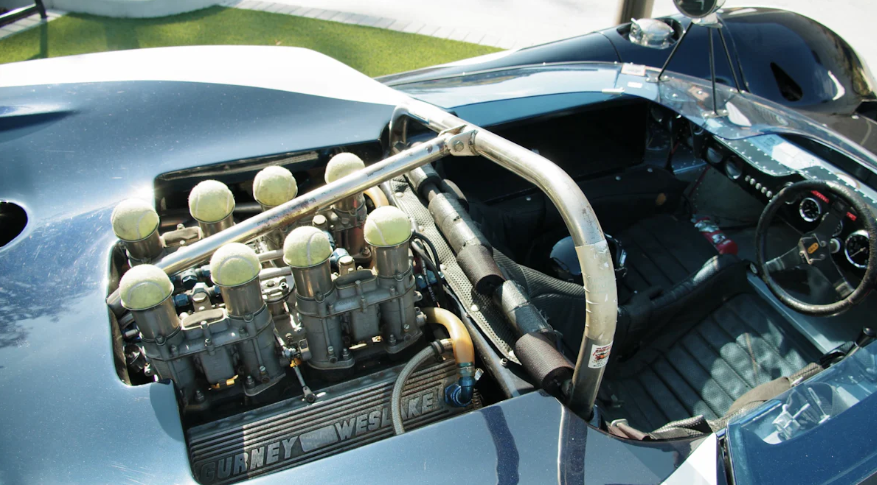
3D printing is revolutionizing maintenance and repair in the automotive industry. It offers innovative solutions that streamline processes and enhance efficiency.
On-Demand Spare Parts by using 3D printing
Automotive manufacturers have been changed their way for producing spare parts with 3D Printing. This approach provides several benefits:
Immediate Availability
Imagine needing a specific component and having it ready almost instantly. 3D printing makes this possible by allowing manufacturers to produce parts on demand. This capability eliminates long waiting times and ensures that repairs can happen swiftly. No more delays due to unavailable parts!
Reduced Inventory with 3D Printing
In those days, you could guess at your spare parts inventory. But things are different with 3D printing.” Manufacturers are able to produce components on demand — this significantly reduces the amount of stock held. This does not just free up potentially very-price effective storage space, but also reduces the cost of storing excess stock.
Legacy Part Production
3D printing also plays a crucial role in producing legacy parts. These are components for older or discontinued models that might otherwise be hard to find.
Support for Discontinued Models
For owners of older vehicles, sourcing parts can be sorely missed. With discontinued models, It can help as they can allow parts to be made. It can be difficult to keep those sweet, simpler cars on the road without the right parts or support available, but even vintage vehicles can remain on the road when they’re supported like this.
Cost-Effective Solutions
Traditional manufacture of replacement parts for legacy systems can be expensive and time-consuming. A cost-effective solution lies in 3D printing. It makes it possible for manufacturers to produce parts without costly tooling or molds. This efficiency means savings for both manufacturers and consumers.
Future of 3D Printing in Automotive Prototyping

The automotive sector has massive, exciting potential with 3D printing. The evolution of this technology paves the way for innovations in designing and manufacturing vehicles. So, let’s look into some possible developments and industry trends that may stand the way towards the advancements of automotive prototyping.
Potential Advancements in 3D Printing
Material Innovations
As 3D printing comes to revolutionized material used in prototyping automotive. Scientists continues to create new materials that are stronger, lighter and more sustainable. Envision a world in which cars were built from biodegradable or even composite materials that boast strength and durability equivalent to steel, but weigh significantly less. These advancements could result in environmentally friendly and more efficient vehicles. As an automotive industry expert Mohamed Elgendy points out, “3D printing technology is revolutionizing the automotive engineering industry; it saves time and money by prototyping.”
Integration with AI and IoT
The combination of 3D printing with artificial intelligence (AI) and the Internet of Things (IoT) creates greater potential. AI can be used to ensure that designs are optimized for performance and efficiency, while IoT connects 3D printed components to a network to allow real-time monitoring and maintenance. We could see vehicles that are smarter, more networked, and responsive to their environment and user needs thanks to this synergy. 3D printing is proving a critical component to shifting the design of the automotive industry into overdrive.
Industry Trends with 3D Printing
Increased Adoption
3D printing is increasingly being adopted in the automotive industry. Fewer manufacturers are calling it the enemy as it has more potential to cut costs and lead times. This trend will continue as hardware improvements have already done 3D printing simpler / faster to be more widely available. Across all areas of manufacturing, leading experts have noted how broadly the industry is using this technology increasingly for prototyping, tooling, and even mass production. Speed is at the forefront of this and potential way of working: shorter time to market, less wastage, plus the ability to generate complex geometries easily.
Collaborative Development in 3D printing
The full potential of 3D printing in automotive prototyping comes from collaboration. Working in collaboration with manufacturers, researchers and technology providers. This collaborative tendency enables innovation and the emergence of new ideas with regards to 3D printing applications. Collaborating who have extensive experience in the field will help faster adoption of 3D printing leading to new wave of automotive breakthroughs.
Automotive prototyping is undergoing a revolution brought about by 3D printing technology, several of the benefits it offers potential for companies are in terms of speed, cost savings and design flexibility. Using this technology, manufacturers can quickly produce custom prototypes with simple tooling. It encourages lightweight designs, improving fuel efficiency and performance. The rise of automotive 3D printing is shaking up the way parts are designed, prototyped and manufactured. Advancement in the fields of windshield manufacturing, smart materials, development of AI and IoT integration will be the things to look out for. Owing to its aerodynamic design, less number of components, reduced consumption of raw materials, and large-scale production ability, 3D printing is said to be the game-changer in automotive manufacturing and taking the industry to a better future.