



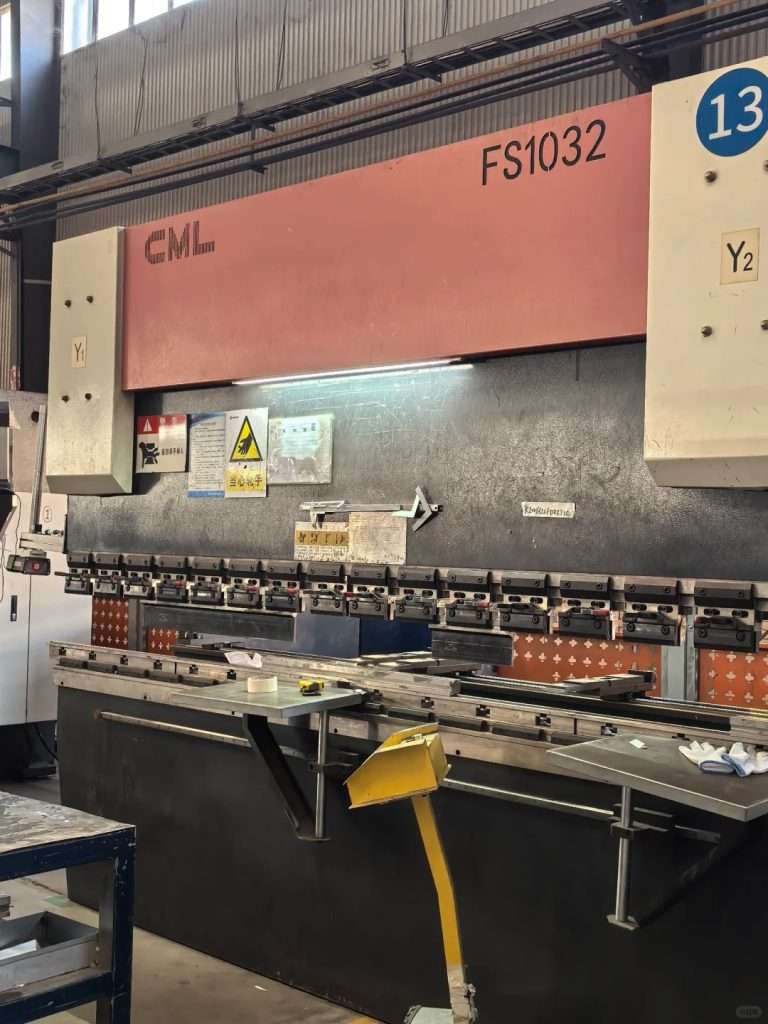
Sheet Metal Forming is the central to the advancement of Automation, material science and precision manufacturing are propelling robotics into a new era. The quintessential method that mold the skeletal structures, casings, and functional elements of robots. Together with CNC machining and precision machining, this trio language opens the door to unparalleled efficiency, accuracy and scalability. In this blog, we’ll look at how these disciplines come together to reshape robotics manufacturing and why they are important to the the industry’s next wave.
Formation of Plate Metal: The Structure Framework of Robotic System
The third example is sheet metal forming, which takes flat metal sheets and forms them above their yield point using techniques such as bending, stamping, or deep drawing. This is an integral step in robotics to make lightweight but strong parts like:
Enclosures and chassis for robots: For electronics protection and structural rigidity
Servo joints: Allowing articulated movement in a robotic arm.
Vision and LiDAR mounts: Custom mounts fo rvision systems or LiDAR
Why Sheet Metal Forming Matters in Robotics
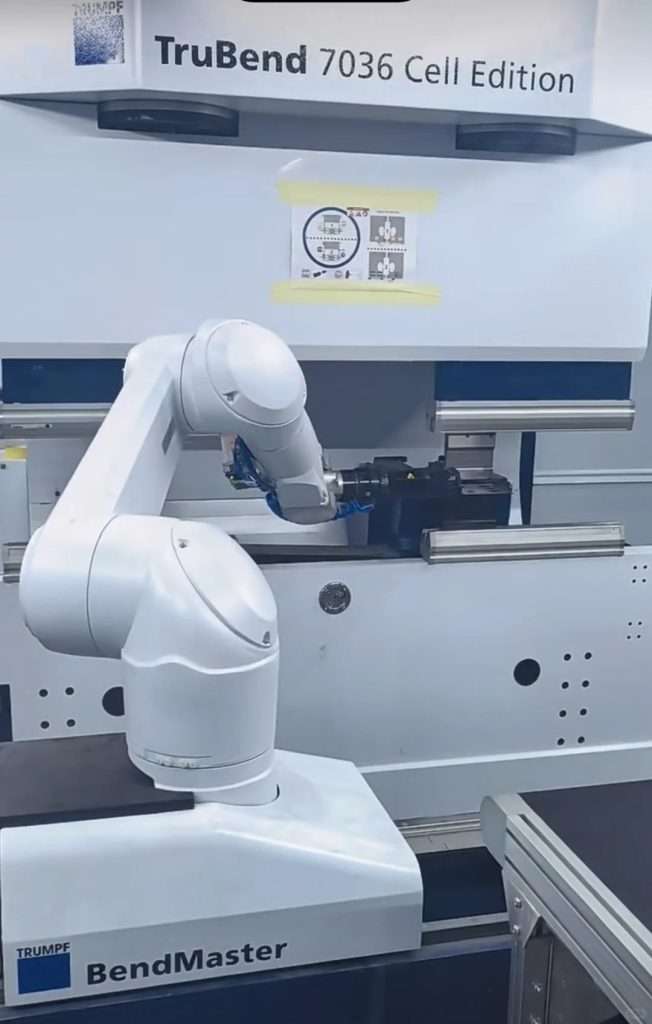
Robots work in the dynamic environments—from factory floors to surgical theaters—where their components must endure vibrations, impacts and repetitive motion. Sheet metal forming enables manufacturers to configure material thickness, curvature, and rigidity to meet these demands. Aluminum alloys, for example, are commonly selected for their strength-to-weight ratio; stainless steel resists corrosion in demanding industrial environments.
Challenges and Innovations with Sheet Metal Forming
Conventional forming techniques are also limited to ultra-thin gauges (<0.5mm) or complex designs needed for miniaturized robots. Laser-assisted forming, which locally generates heat to minimize springback, and a flexible CNC-driven process for low-volume, high-mix production called incremental forming, are both state-of-the-art solutions.
CNC Machining: Elevating the Precision of Sheet Metal Parts
As sheet metal forming shapes them, CNC machining achieves tolerances as tight as a few micrometers on those parts. This hybrid approach is essential to robotics, where even the smallest changes can lead to catastrophic performance issues.
Key Applications
Post-forming alterations: Drilling holes for wiring, prepping threads for bolts, machining slots for air flow.
Dressing: R <0.8μm smoothness to lower the friction of active parts.
Dual-material Manufacture: Additive manufacture (3D print) and CNC-machined sheet metal.
Benefits of Over Traditional Methods
CNC is well suited to the geometric complexity that can arise in parts for robotics. For example, a 5-axis CNC machine can machine angled features on a pre-formed sheet metal bracket without the need to reposition the workpiece, saving set-up time and errors. Also, the compatibility of CNC with CAD / CAM software allows for rapid prototyping, which can be a boon for robotics startups that are iterating on designs.
A Balanced Potpourri: Is a Robot Sufficing?
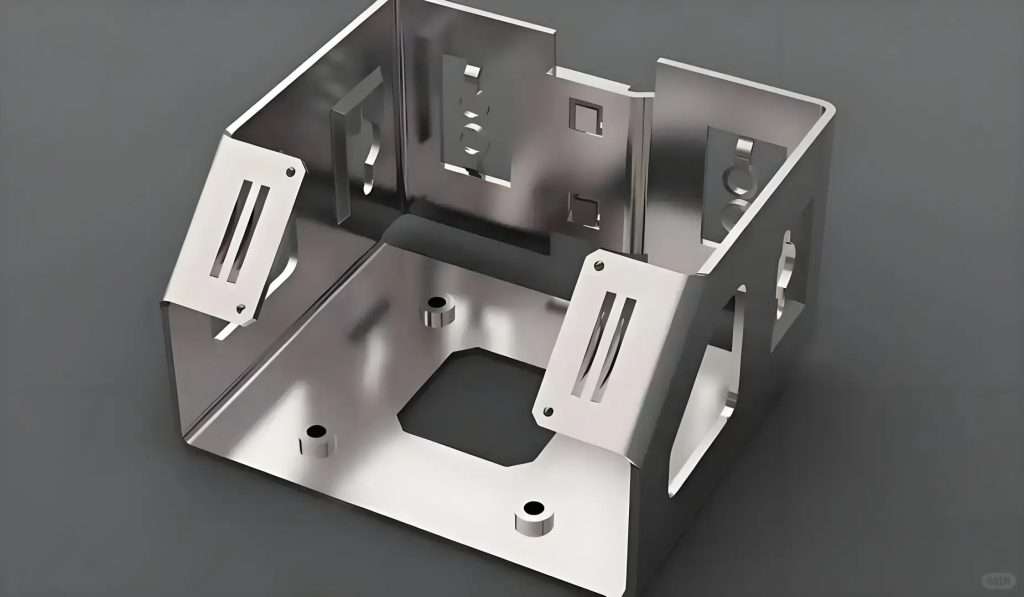
Precision machining goes a step further in accuracy and is concerned with ultra-tight tolerances (±0.005mm) and perfection on the surface. This is crucial for robotics:
Backlash-free transmission: Harmonic drives and gearboxes
End-effectors: Grippers or welding heads that must align perfectly.
Optical systems: Camera and laser mounts where vibration dampening is crucial.
Material Considerations for Sheet Metal Forming
Precision machining typically involves hardened metals such as titanium or tool steel that are not easy to shape using the standard sheet metal techniques. CNC milling and turning here serves as a complement to forming processes. Typically, a robot’s titanium joint, for example, might get stamped, and then CNC-machined to its final dimensions.
The Role of Metrology
Detailed inspection tools—including coordinate measuring machines (CMMs) and optical scanners—verify that each part is conforming to design specifications. Such closed-loop feedback is essential to ensure that robotic systems work smoothly in collaborative (cobots) or safety-critical applications (e.g., medical robots).
The Future: Smarter factories and Sustainably
With the integration of IoT sensors and AI, manufacturers are deploying smart sheet metal forming systems as robotics infiltrates industries. Such systems can now predict tool wear, locati0n of press forces, and even adjust parameters in real time—cutting downtime and scrap rates.
Sustainability in Focus
Nesting software: Material efficiency during sheet metal cutting
Energy recovery — When CNC machines use regenerative drives, braking energy is reused.
Recycling: As much as 95 percent of sheet metal scrap can be recycled under circular economy objectives.
Optimizing through AI-enabled processes: Machine learning algorithms predict the best sequence to form complex parts.
Emerging Trends
Collaborative Robots (Cobots): These can be deployed alongside CNC machines to manage both loading/unloading, increasing the throughput.
Conclusion: Enabling Immersive Environment: A Converged Ecosystem for Next-Gen Robotics
CNC machining, precision machining, and sheet metal forming in robotics manufacturing are not standalone processes but complementary pillars of modern robotics fabrication. Combined as an integrated system, the advanced material, sensor and AI technology enables lighter, stronger, and smarter robots with potential to revolutionize industries from logistics to healthcare. With demand for automation rapidly increasing, manufacturers that master this trifecta will spearhead in efficiently building advanced, reliable, and cost-effective robotics.
The road forward is obvious: In the competition to develop more capable robots, precision is not a goal — it’s the price of entry.